ADA Portable Toilet Rental Checklist for Accessibility Compliance
Renting mobile bathrooms seems basic till you are the individual in charge of making certain everybody can really utilize them. That is commonly where stress and anxiety creeps in. Occasion coordinators, residential property managers, college staff, church volunteers, districts, and entrepreneur usually have a lots relocating parts at the same time. Mobile hygiene obtains assigned to a vendor, a distribution date obtains booked, and every person assumes the easily accessible unit inquiry is taken care of. Sometimes it is. Sometimes it is not.
That void issues due to the fact that ease of access is not an attractive upgrade or a courtesy function. If portable toilets are offered to the general public, availability has to become part of the strategy from the start. The controlling government criterion in the USA is the 2010 ADA Specifications for Accessible Design, as translated by the Department of Justice and the Access Board. For mobile single-user bathroom collections, a minimum of 5 percent of the units in each collection must come, and the Accessibility Board explains that this applies even at momentary events.
That one rule alone addresses a shocking variety of questions, but not all of them. A certified configuration has to do with greater than getting one larger device and calling it done. Positioning, course, entrance, clear floor area, turning room, fixture clearances, door navigating clearances, and needed attributes such as grab bars all come into play. In technique, a lot of conformity troubles happen outside the system as commonly as inside it. A restroom can be marketed as an ada available mobile bathroom and still end up being pointless if it is gone down onto soft ground, obstructed by secure fencing, or approached by a high short-lived ramp that does not meet the technical requirements.
If you need a sensible way to evaluate your rental before delivery day, the checklist below will keep you focused on the issues that matter most.
The list that catches most troubles prior to they come to be expensive
Use this before signing a rental order, and then once more when the units show up on site.
-
Confirm the quantity rule for every collection. If you are leasing portable single-user devices in a group, at least 5 percent of the units in that cluster must be accessible.
-
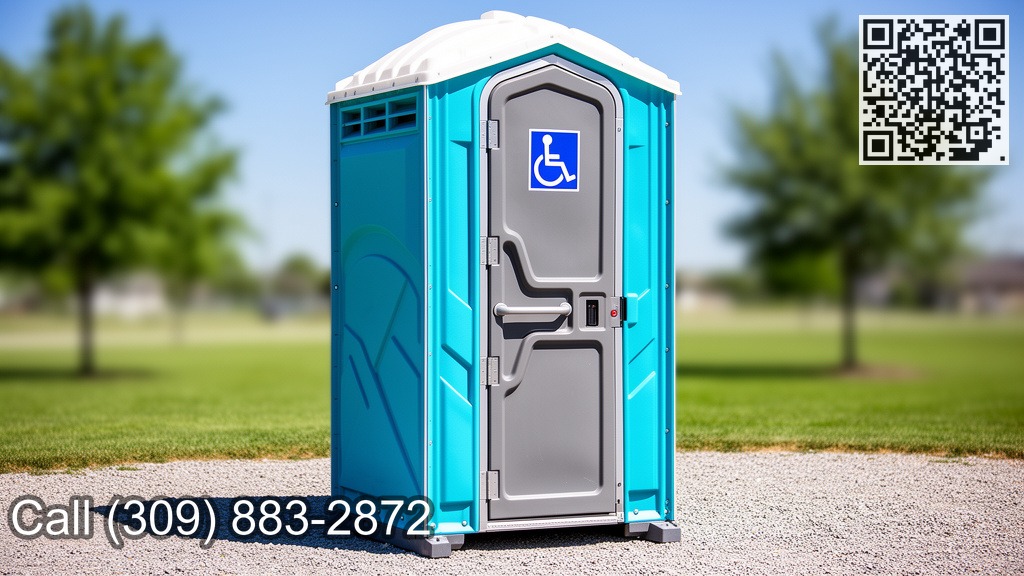
Verify that the available unit is actually identified. An ada certified mobile toilet must show the International Symbol of Accessibility.
-
Check the strategy, not simply the toilet. The ada portable bathroom should have an easily accessible route and available entrance, and any kind of ramp or touchdown that is needed has to fulfill ADA technical requirements.
-
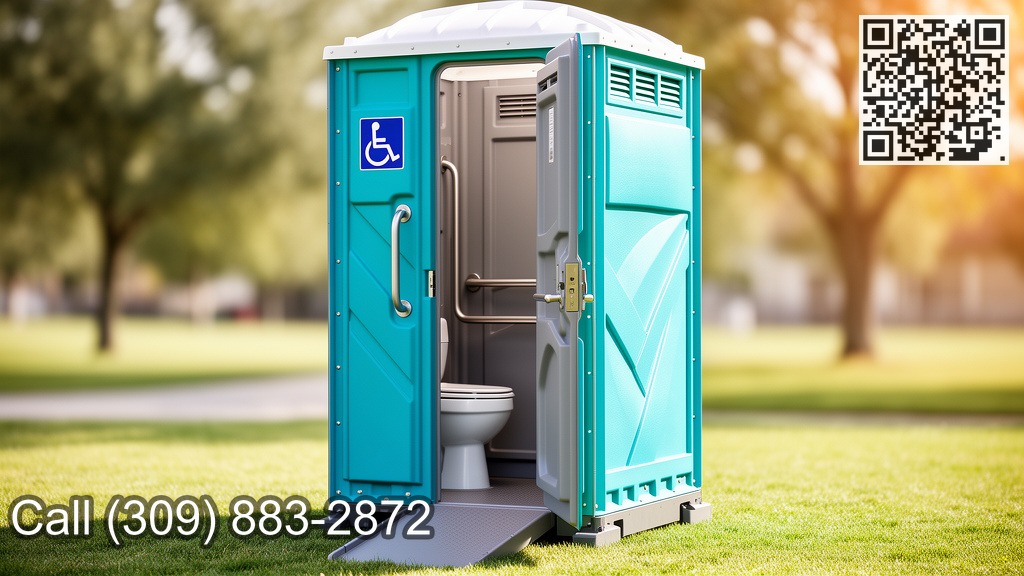
Ask whether the unit fulfills toilet-room technological demands. That consists of transforming space, fixture clearances, door maneuvering clearances, and relevant grab-bar and water-closet clearance rules.
-
Recheck the final placement after delivery. A compliant system can end up being noncompliant if the website conditions, barriers, or temporary design change after installation.
That list is brief on purpose. The work is in the follow-through.
Why the 5 percent regulation should have even more interest than it gets
People commonly hear that they require "an ADA system" and quit there. The even more precise question is the number of easily accessible units are needed in each cluster. The Gain access to Board guidance is direct on this factor. For collections of portable single-user commode devices, at the very least 5 percent needs to be accessible, and that applies even at short-lived events.
This matters for events, outdoor wedding events, institution functions, sports events, charity runs, public meetings, emergency feedback sites, and seasonal attractions. It also matters at big private events when mobile bathrooms are supplied to visitors or participants. If there are several washroom financial institutions spread out across a website, treat each collection seriously instead of assuming one easily accessible unit somewhere on the building addresses the issue for everyone.
An usual real-world mistake is centralizing the only ada mobile bathroom far from where individuals collect, while other collections continue to be standard-only. That creates a sensible access issue even prior to anybody starts discussing technical conformity. Individuals do not experience toilets as abstract rely on paper. They experience range, surface problems, congestion, and whether they can get in with self-respect without asking for help.
It is additionally worth reading the narrow exception thoroughly. The older 1991 standard prominent mobile toilet systems at construction websites used exclusively by construction personnel from the usual portable-toilet accessibility scoping requirement. That does not develop a wide technicality for basic leasings. If your circumstance is a general public-facing mobile bathroom rental, the accessible-unit need remains the essential rule.
The most ignored part of an ada compliant portable restroom is frequently the ground underneath it
On paper, many vendors can give ada compliant obtainable mobile washrooms. On site, problems inform the real tale. I have actually seen otherwise acceptable systems made virtually ineffective by placement choices that looked safe in the beginning glimpse. A couple of additional feet into turf. A small incline near a fencing line. A short-lived floor covering that shifted after one active mid-day. A row of crowd-control barriers that tightened the entry approach.
The ADA standards do not quit at the walls of the system. The obtainable mobile toilet has to have an accessible course and available entrance. If a ramp or landing is needed, it should abide by the ADA technological demands. That implies access begins where the individual comes close to the device, not where the door starts.
For organizers, this is where compassion matters. A mobility device customer, someone using a walker, an older grownup with equilibrium limitations, or a parent assisting an impaired family member ought to not have to navigate mud, ruts, sudden level modifications, or makeshift ramps that really feel unsteady. Even when a website is temporary, the experience should really feel calculated and safe.
This is also why last-minute relocations deserve analysis. Occasionally an additional vendor shows up and needs area for outdoors tents, generators, barriers, or food service. The obtainable unit gets pushed to the edge of the site since it is bigger. That single choice can break the course, produce an unpleasant turn at the door, or place the device where a called for landing is no longer practical. Every action should activate another access check.
What to validate inside the system, even if you trust the vendor
Most service clients are not expected to memorize the technological areas of the ADA. Still, you must understand what classifications to inquire about. The Accessibility Board advice mentions that portable easily accessible systems should satisfy toilet-room technical needs, including fixture clearances, turning space, and door handling clearances, in addition to appropriate grab-bar and water-closet clearance rules.
Those expressions can sound dry until you think of what they stand for in practice. Turning space affects whether an individual making use of a mobility device can reposition inside the unit. Door navigating clearance impacts whether the customer can open up, handle, and go through the door without a fumbling suit. Fixture clearances and water-closet clearances establish whether the toilet can really be come close to and made use of. Get bars are not optional convenience attributes. For several users, they are what makes independent use possible.
This is where marketing language can misdirect. A vendor might define a device as a "huge" or "wheelchair" mobile commode. Dimension alone does not respond to the compliance inquiry. An ada handicap accessible mobile toilet needs the required access features and clearances, not simply a bigger shell. If a vendor can not confirm that the device satisfies the applicable toilet-room technical demands, pause there. Bigger is not the like compliant.
The recognition piece matters as well. Obtainable mobile commode systems need to be marked with the International Symbol of Availability. That appears fundamental, but it serves a useful objective. At active events, individuals need to find the proper unit promptly, especially in poor illumination, in groups, or when signage somewhere else is irregular. Noting also assists staff direct site visitors correctly without confusion.
Temporary occasions are not exempt because they are temporary
This factor shocks people every season. A one-day fair, weekend fundraiser, or brief event can feel as well momentary to cause major design thinking. The Access Board specifically specifies that the 5 percent accessible-unit guideline applies also at short-lived events. Short period does not remove the access obligation.
In practical terms, momentary sites frequently require much more preparation, not much less. Permanent structures at least have established courses and surface areas. Temporary websites introduce variables that move hour by hour, consisting of climate, devices traffic, secure fencing changes, and rushed arrangement crews. A course that seemed easily accessible at 8 a.m. Can end up being obstructed by noontime. A distribution team might establish the ada compliant portable bathrooms correctly, then another professional piles products nearby and narrows the technique. Conformity is not frozen currently of delivery.
This is why the very best event supervisors do one last walk after every supplier has actually ended up establishing. They do not simply seek whether an ada mobile restroom exists. They inspect whether a person can reach it, enter it, and utilize it under real event conditions.
Questions worth asking before you schedule the rental
A thoughtful conversation with the rental company can prevent most issues. You do not require to play examiner. You do need to ask straight, plain-language questions and pay attention for straight, plain-language answers.
Ask whether the vendor can provide an ada certified portable commode that satisfies the ADA technological needs appropriate to mobile toilet rooms. Ask the amount of units in your cluster will be accessible based on your total matter. Ask whether the provided device will show the International Symbol of Accessibility. Ask what site conditions they require from you to keep an accessible course and entryway. If a ramp or landing may be required, ask that is in charge of making certain that those functions adhere to ADA technological requirements.
The top quality of the response tells you a lot. Experienced suppliers have a tendency to respond to without hedging, and they usually change the conversation to site problems swiftly due to the fact that they know the route and positioning are where numerous tasks fail. Obscure reassurance such as "our handicap device is the large one" should make you slow down.
If you are handling ada portable toilet leasing for a public entity, a college, or a large occasion, document what was ordered and where it will certainly be put. Availability errors commonly start as interaction errors. One person orders the available system, an additional person alters the site map, and a third individual guides the configuration team without seeing the contract notes.
When one accessible device is technically present however functionally unusable
This is the situation that causes the most aggravation due to the fact that it looks compliant from a range. The easily accessible device exists. It is bigger. It has the appropriate icon. Yet individuals have problem with it due to the fact that the course crosses harsh ground, the entryway area is cramped, or the door clearance is obstructed by another object.
Here are several of the failing patterns that turn up repeatedly:
-
The accessible system is provided, but the course to it is blocked by secure fencing, trash bins, parked devices, or saved event supplies.
-
The site adds a ramp or touchdown, but no person checks whether that function fulfills ADA technological requirements.
-
The accessible system is put in a collection, then changed after shipment to solve a format trouble elsewhere.
-
The supplier gives a bigger system, however nobody confirms that the necessary turning room, maneuvering clearances, and relevant component policies are in fact met.
-
The system is accessible in daylight on a dry configuration day, after that weather or foot website traffic alters the strategy problems before the public arrives.
None of these failures require bad intent. A lot of come from rush, assumptions, or fragmented responsibility. That is why a short list and a last walk-through can do a lot good.
Choosing language carefully when you connect with vendors and teams
Search terms and market lingo can get unpleasant fast. You will see phrases like ada certified mobile bathrooms, ada-compliant portable washrooms, ada compliant mobile commode, ada-compliant portable bathroom, ada available portable washroom, and ada handicap obtainable mobile restroom made use of reciprocally in the marketplace. For useful functions, the phrasing matters less than the compound. What issues is whether the device and its placement satisfy the ADA requirements and advice that apply.
Still, precision aids. When speaking with vendors or interior teams, ask for an accessible mobile unit that complies with ADA https://daltonatgd262.moderncairn.com/posts/ada-compliant-portable-bathroom-rental-what-the-2010-criteria-require needs, and afterwards link the demand to the particular problems you need confirmed: amount in the collection, sign noting, easily accessible course, accessible entryway, any kind of called for ramp or landing compliance, and the toilet-room technological demands. Clear language lowers the possibility that someone listens to "obtainable" and believes you only mean "larger."
A note for construction-related rentals
Construction setups are one location where individuals typically repeat half-remembered regulations. The confirmed context below is slim and essential. The 1991 common notable mobile bathroom units at construction sites used specifically by building and construction workers from the portable-toilet access scoping requirement gone over because standard. That does not suggest every construction-related service is immediately outdoors accessibility assumptions in every situation, and it certainly does not change the standard rule for basic portable commode leasings. If your units are for the general public or for a general occasion setting, do not rely on construction-site assumptions.
When a project has blended usages or overlapping target markets, that is the moment to obtain certain and careful instead of casual. Broad assumptions are expensive.
Accessibility compliance is being seen in a more comprehensive way
Portable toilet access does not exist in a vacuum. The more comprehensive conformity environment remains to move. One current instance is the Department of Justice assistance released in April 2026 that prolonged the due date for certain state and local government web and mobile accessibility policies to April 26, 2027 for larger entities. That upgrade was about digital access, not mobile commodes, however it shows something essential: ADA compliance is energetic throughout fields, and companies are expected to take access seriously in several parts of operations.
For supervisors and public entities, that bigger backdrop alters the tone of these choices. Ease of access is no longer treated as a side concern that can wait till somebody grumbles. It is progressively come close to as a common preparation responsibility. Mobile sanitation must be managed with that said same mindset.
The functional requirement to intend for
If you are trying to make an audio choice without getting shed in legal language, use a straightforward examination. When your website opens, can an individual that needs the available unit discover it, reach it, enter it, and use it with the features and clearances the ADA calls for? If the response is uncertain at any kind of factor, maintain checking.
That is the actual worth of planning ahead. An ada portable washroom is not simply a line item in a rental arrangement. It becomes part of whether visitors really feel taken into consideration, whether participants can stay for the complete event, whether households prevent stressful workarounds, and whether organizers execute their duties with care.
The ideal configurations hardly ever accentuate themselves. Individuals simply use them without rubbing. That quiet success is what access ought to really feel like.
 Ask ChatGPT
 Ask Grok
 Ask Perplexity
 Ask Claude
 Ask Google AI
 Ask You